

Dubai offers an exceptional range of pre-owned luxury watches, from modern sports models to rare vintage and independent pieces. The variety is exciting, but a good purchase should be based on more than a famous name, an attractive price or a polished set of photographs.
The safest approach is simple: identify the exact watch, understand its condition and history, and arrange a physical inspection before making a final commitment. You can begin by exploring our current collection of luxury watches in Dubai, then use the checks below to evaluate any piece you are considering.
Start with the exact reference number
Most modern luxury watches, and many vintage models, have a reference number that identifies the model, case material, size, dial family, bracelet type or other important specifications.
Do not rely only on the model name. Different versions of the same watch may look similar in photographs while having very different specifications, production periods and market values.
Before proceeding, ask for:
- The complete reference number
- The approximate year or production period
- The case and bracelet material
- The movement type
- The watch size
- Clear photographs of the dial, case, case back, crown, clasp and bracelet
The serial number usually relates to the individual watch rather than the general model. It should be handled carefully and does not need to be displayed publicly in full. During an inspection, it may help connect the watch with its documentation or service records.
Condition means more than “excellent” or “mint”
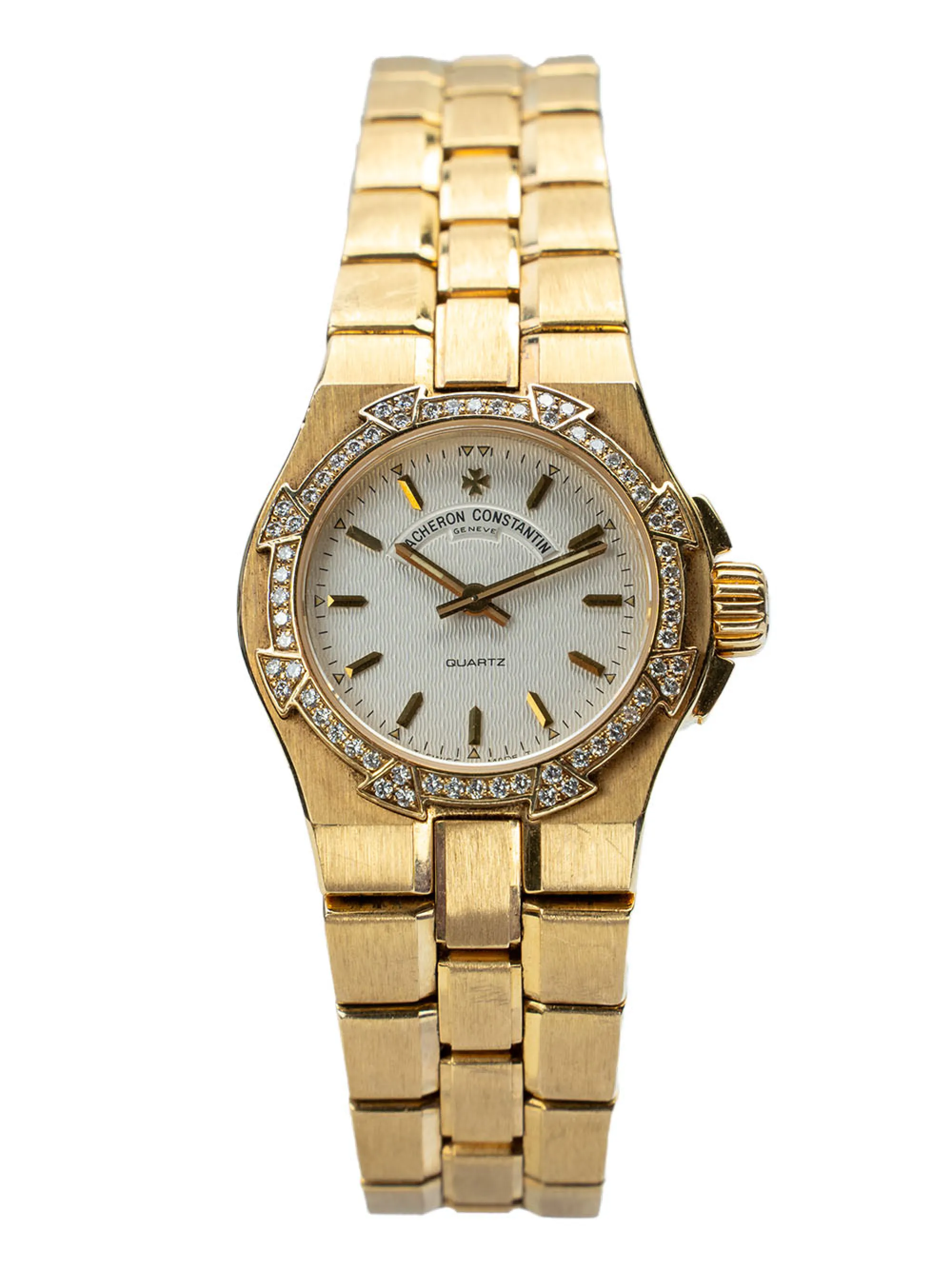
Condition should be assessed across the case, dial, crystal, bracelet and movement—not reduced to a single sales label.
Condition descriptions are subjective. One seller’s “excellent” watch may show significant polishing, bracelet wear, replacement components or signs of moisture when examined closely.
A proper condition review should consider the whole watch:
- Case: Are the original lines, edges and proportions still visible, or has the case been heavily polished?
- Dial and hands: Are they consistent with the reference and approximate production period?
- Bezel, crown and pushers: Are they correct for the model, and do they operate normally?
- Bracelet and clasp: Check for stretch, damaged links, incorrect end links or excessive refinishing.
- Crystal: Look for scratches, chips, internal marks or signs of poor replacement work.
- Case back: Check for deep opening marks, incorrect engravings or damage caused by unsuitable tools.
Water resistance should never be assumed simply because the watch looks clean or was originally designed as a sports watch. Seals, crowns, crystals and case components can deteriorate over time and require appropriate testing.
Understand what is original, replaced or modified
A watch can be genuine while containing legitimate service-replacement parts. This is different from a watch fitted with aftermarket, incorrect or misleading components.
Ask whether the dial, hands, bezel, crown, crystal, bracelet and movement components are believed to be original to the watch. Replacement parts are not automatically negative, especially when required during servicing, but they should be disclosed because they may affect collectability and value.
Pay particular attention to:
- Aftermarket diamond setting
- Repainted or refinished dials
- Incorrect hands or bezels
- Mixed bracelet and clasp references
- Non-original case or movement components
- Modern replacement parts fitted to a vintage watch
The correct interpretation depends on the reference, age and purpose of the purchase. A collector seeking originality may evaluate a watch differently from someone looking for a reliable daily wearer.
Check the movement and service history
A luxury watch may look excellent while still requiring mechanical work. The movement should therefore be assessed separately from the external appearance.
Depending on the watch and the agreed inspection scope, useful checks may include:
- Timekeeping performance
- Power reserve
- Winding and setting functions
- Date, calendar or chronograph operation
- Unusual noise or resistance
- Visible corrosion, contamination or unsuitable previous repair work
Service invoices can provide useful context, but read them carefully. Confirm the date, the company that performed the work and exactly which components were repaired or replaced. A statement such as “recently serviced” should be supported by details wherever possible.
Box and papers are valuable, but they are not the whole story

For uncommon references, originality, configuration and physical condition can matter more than accessories alone.
Original documentation can help establish the reference, original sale information and ownership history. The box, manuals, tags and accessories may also improve completeness and collector appeal.
However, box and papers should not be treated as proof of authenticity by themselves. Documents and accessories can become separated from a watch, matched incorrectly or acquired independently.
Likewise, a watch without its original box or papers is not automatically a poor purchase. Its condition, originality, movement, provenance and price must be evaluated together.
Review the seller and the terms of the transaction
The watch is only one part of the decision. You should also understand who is selling it and under what conditions.
Before transferring money, confirm:
- The seller’s identity and contact details
- The exact watch reference and agreed price
- What is included in the sale
- Whether the watch is available or subject to prior sale
- Whether inspection is permitted before final payment
- The invoice, payment and return conditions
- Any stated warranty and what it actually covers
Be cautious when pressure is used to prevent reasonable questions or an independent inspection. A desirable watch can sell quickly, but urgency should not replace due diligence.
Why a physical, independent inspection matters
Useful next steps: watch authentication in Dubai, luxury watch restoration, sell or value a watch.
Photographs and videos are useful for initial screening, but they cannot reveal every detail. Lighting, editing, camera angles and image quality can hide polishing, dial work, corrosion, mechanical issues or incorrect components.
An inspection-first process allows the watch to be reviewed as a complete object rather than as an online listing. At Nautilus Dubai, our watch authentication and inspection service is based on the physical watch presented to us.
Depending on the watch and agreed scope, the review may consider external condition, reference consistency, visible components, movement performance and supporting documentation. Any opinion is based on the watch available for examination at that time and should not be confused with a manufacturer-issued certificate or guarantee.
A practical pre-owned watch buying checklist
- Confirm the exact model and full reference number.
- Compare the visible configuration with the expected reference.
- Ask about polishing, repairs and replacement parts.
- Review the dial, hands, case, bracelet, clasp and crystal.
- Request details of previous servicing and supporting invoices.
- Check what box, papers and accessories are included.
- Confirm the seller, invoice, payment and return terms.
- Arrange an independent physical inspection before final payment.
- Evaluate the price in relation to condition, originality and completeness.
- Keep copies of the listing, correspondence, invoice and inspection findings.
Looking for a particular watch in Dubai?
You can browse our available pre-owned luxury watches or submit a request through our Private Watch Finder.
Share the brand, model, reference number, preferred condition and approximate budget. Availability and pricing should always be reconfirmed, and any final recommendation remains subject to inspection of the specific watch.
Nautilus Dubai is an independent luxury watch specialist and is not affiliated with, endorsed by or authorized by the watch brands mentioned on this website unless explicitly stated.